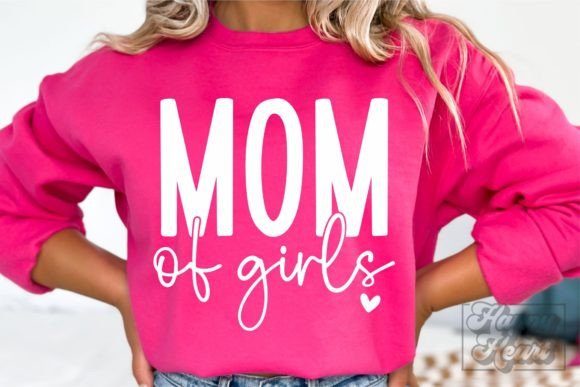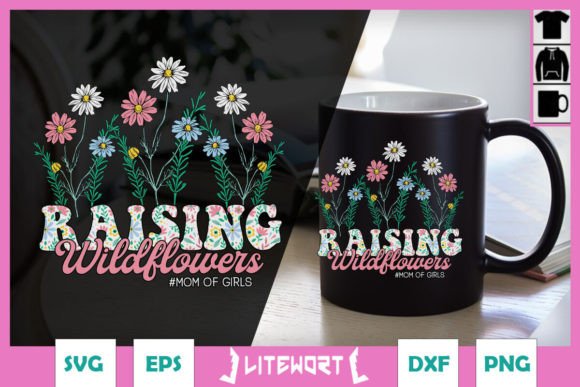
Raising Wildflowers Mom of Girls SVG
A Designer’s First Look: Soft, Sentimental, and Stitch-Ready
When I opened Raising Wildflowers Mom of Girls SVG, my first thought wasn’t “cute”—it was “calm.” There’s a gentle rhythm to the lettering: relaxed curves, subtle floral flourishes tucked between letters, and a light, airy spacing that avoids visual crowding. It doesn’t shout—it breathes. That matters more than you’d think when translating a digital embroidery file into real-world stitch. I immediately pictured it on a linen tea towel for a baby shower gift, or softly stitched onto the chest of a cream-colored sweatshirt for a mom-owned boutique. The design feels intentional—not overly ornate, not stripped bare—just right for a handmade product that carries emotional weight without demanding attention.
Where This Embroidery File Truly Shines
I tested Raising Wildflowers Mom of Girls SVG across three real projects: a medium-weight cotton tote bag, a lightweight baby onesie, and a structured twill apron. On the tote, it stitched cleanly with minimal puckering—especially after switching to a medium tear-away stabilizer. The letterforms held their shape, and the small wildflower accents (those delicate stems and open blossoms) read clearly at 3.5 inches wide. On the onesie? A little more care was needed: I reduced stitch density slightly and used a lightweight cut-away stabilizer underneath. Even then, the design retained its softness—no harsh edges, no thread buildup. That’s rare in machine embroidery designs meant for sentimental baby embroidery.
The apron was the real litmus test. Twill has texture and some give, and the design sat just above the pocket—curving slightly over the seam. Because Raising Wildflowers Mom of Girls SVG avoids tight corners and ultra-thin serifs, it adapted beautifully. No skipped stitches, no distortion in the “R” or “W.” That tells me this is a thoughtful embroidery file—not just a vector trace dropped into digitizing software. It’s built for movement, fabric drape, and everyday wear.
Real-World Use Cases That Just Fit
- Personalized gifts: Perfect for embroidered pillow covers, nursery wall hangings, or holiday embroidery on flannel blankets—especially when paired with neutral thread colors like oatmeal, sage, or dusty rose.
- Small shop merchandise: As a sweatshirt embroidery option for a local mom-and-pop boutique, it reads warm and inclusive—not trend-chasing, but timelessly kind.
- Etsy seller assets: The included PNG with transparent background makes clean mockups effortless. Pair it with a soft-focus photo of a handmade tote or ceramic mug, and your listing feels cohesive, not cluttered.
- Craft fair products: Works well as an embroidered patch (when backed with iron-on fusible web), then sewn onto denim jackets or canvas backpacks—giving handmade appeal without requiring complex applique design steps.
Where to Pause—and Plan Ahead
This isn’t a one-size-fits-all embroidery file. It performs best when you honor its natural scale and simplicity. Avoid cramming Raising Wildflowers Mom of Girls SVG into a tiny hoop—say, under 3 inches wide. Those floral details lose clarity, and satin stitch areas can look muddy. Likewise, skip it on highly textured fabrics like bouclé or thick terry cloth unless you’re willing to double-stabilize and adjust tension manually.
Stretchy fabrics (think ribbed knits or lightweight jersey) need extra prep: use a light tear-away *plus* a layer of wash-away topping to keep stitches from sinking between fibers. And while the design works on dark fabric, avoid very fine black or navy thread on deep backgrounds—the delicate stems and thin letter connectors may fade visually. Test in black and white mockups first. You’ll see exactly where contrast drops off.
What This Design Says—Before a Single Stitch Is Laid
Customers don’t buy embroidery files—they buy feeling. Raising Wildflowers Mom of Girls SVG quietly communicates care, authenticity, and grounded joy. That translates directly to perceived value: a customer paying $48 for a custom-embroidered apron doesn’t just want stitching—they want to feel seen. This design delivers that. It also supports brand consistency for craft businesses: whether you’re selling digital embroidery files or finished products, its tone stays cohesive across formats—SVG for editing, PNG for mockups, DXF if you’re laser-cutting stencils or vinyl.
That said, it’s not flashy. It won’t dominate a busy Etsy homepage banner—but it *will* convert in a thoughtful, slow-scrolling moment. Think: a tired new mom searching for “gentle mom embroidery,” or a daughter looking for a wedding gift for her mother. Its quiet strength builds trust faster than bold, saturated fonts ever could.
Practical Notes Every Embroidery Designer Should Keep Handy
- Always run a test stitch on scrap fabric matching your final project’s weight and weave.
- Check thread color contrast—not just on screen, but under natural light. Some muted greens or mauves look richer in person than they do on a monitor.
- Review stitch density before hooping. If your machine struggles with dense fill areas, reduce density by 5–10%—especially for baby embroidery or lightweight apparel.
- Confirm hoop size compatibility. Though pre-sized for cups, verify dimensions before scaling for larger items like tote bags or pillow covers.
- Inspect small details at actual stitch size: zoom in on the flower centers and letter terminals. If they vanish or blob together, simplify or re-digitize those elements.
- Use proper stabilizer—not just for hold, but for surface control. Lightweight cut-away for knits, medium tear-away for woven cottons, and always a topping for napped or fuzzy fabrics.
- Double-check licensing terms before using in commercial embroidery or reselling as part of a digital product bundle. The listing says it includes SVG, PNG, and DXF—but confirm usage rights for your specific craft business model.
Final Thought: A Design That Grows With You
Raising Wildflowers Mom of Girls SVG isn’t loud. It doesn’t chase algorithms or trends. But in a market flooded with over-digitized, high-density embroidery files, its restraint is its strength. It’s the kind of design that looks better after five washes—not worse. That’s the mark of something built for real life, not just render previews. Whether you’re an Etsy seller curating a collection of mom-themed graphics, a small shop owner stitching custom apparel, or a hobbyist making holiday embroidery for loved ones—this file earns its place in your library. Not because it’s perfect, but because it’s honest, adaptable, and quietly confident. And in crafts—and in life—that’s what lasts.